Sunday, June 27, 2021

Mining injury from 40 years ago ...

At work, we all contribute to a reporters' blog. I figured I might as well add my latest contribution here. Enjoy this old time memory. 

-----


It’s one of those things that happens when it is damp outside. I am pretty sure I have the type of arthritis that gets irritating when the weather is damp. The saying ‘I know it in my bones’ comes to mind.

I haven’t taken it to a doctor because it’s not so bad. But there are days when I feel the ache, especially in my left foot. I was thinking about it recently when I suddenly realized that nearly 40 years had passed since I had the unusual accident that caused this ongoing irritation.

It happened in October of 1981. It was sometime just after two in the morning and I was 3,000 feet underground at the Kidd Mine in Timmins.

I had taken a leave from journalism several months earlier when my salary as a TV reporter had been seriously slashed. A new broadcasting company was being formed with a merger involving Cambrian Broadcasting and Mid-Canada Television. I couldn’t complain. Lots of people had been laid off. In my case, I still had a job, but with a $2,000 pay cut.

With a new house, a wife and a couple of youngsters at home, I didn’t have much choice. I had bills to pay. Mining looked attractive in the sense it paid well. 

In those days, if you wanted to work in the mine, you showed up at the mine office and applied for a job. I was given a slip of paper and told to get a chest Xray  and a physical.

The day after that I was in the mine captain’s office for a quick interview at 7 a.m. I was given boots, a safety belt, coveralls, safety vest, hard hat, safety glasses, Rastall wrench and work gloves. 

I spent the rest of the day in a classroom in the basement of the administration building at the Kidd Mine, getting orientation and safety briefings.

I was with two other guys, Boris and Danny, also starting their first day at Kidd. They had both worked at other mines. The orientation seemed boring for them. I was a stone-cold rookie. I hung on every word the instructor talked about. 

The next day I was in the dry where I put on my mining clothes. Everything was new. Everyone could see I was the rookie. Crisp, clean, dark green coveralls. 

I looked around and took cues from the other guys. I rolled up the sleeves of my coveralls a couple of turns at the cuffs, just enough to look cool. I tucked my gloves into my belt, wore my hard hat at a bit of an angle and wore my cap lamp loosely dangling with the cord hanging around my neck. 

I had been told it was a serious sin to wear your cap lamp on your hat when you got on the cage, because it would shine into the faces of other miners. You just didn’t do that.

The cage was the name given to the massive two-deck elevator that travelled up and down the 5100-foot mine shaft. At Kidd No.1 Mine, the cage carried 140 miners; 70 on the upper deck and 70 on the lower deck. 

The cage tender called out the mine levels that determined whether you were upper or lower deck. I noticed many of the miners would walk onto the cage and then turn and face the cage door. That’s because once the deck was loaded with miners, you were squeezed tightly shoulder to shoulder, often so tightly that you could not turn around. 

I stuck close to Boris and Danny, taking my cues from them. Don’t make eye contact with anyone you don’t know. Listen for your number.

“Hey Gillis, seven-oh-five-nine. Follow me. We get off at 800, first stop.” It was Ron, our common core training guy. I couldn’t move. I was wedged in too tightly with guys on either side of me.

I hadn’t noticed how fast the cage was moving, but I did sense it slowing down in the darkness of the shaft. Noise and light suddenly washed into the cage. It was the 800 level. There was the overly loud hissing of compressed air and the roar of ventilation fans. The light was the brightness of the shaft station with a dozen bare light fixtures. The walls were painted white, punctuated with rusty-coloured rock bolts holding back the black and grey slabs of stone overhead. 

As people began moving off the cage, I was able to walk forward into this bizarre new world. And so it was for the next six weeks that Ron would school us in the skills of hard rock mining; jackleg drilling, stopers, rock-bolting, slushing, mucking, blasting and scaling. Most days we would start off in the 800-level classroom with a coffee break and then head out into the drifts and crosscuts (tunnels).

Fast forward several months later to Oct. 5, 1981. I arrived at work just before midnight. Like everyone else, I changed from my street clothes into my mining clothes. I went to the “wicket,”  a long counter area that had little booths where each shift supervisor met each of his miners and gave them their work orders.

On this day, I would be assigned to the 3,000 level instead of my regular work area, which was 2,800. That meant I would ride the cage to 2,800 and then ride a tractor or walk down the ramp to the 3,000-level lunchroom.

In those days, every miner began his shift with a coffee break and there would be no further breaks until lunch. That way you didn’t have miners stopping work a couple of hours into their shift to return to the lunchroom for coffee.

The 3,000 lunchroom was basically a cave cut out of the rock off the main haulage tunnel with electrical lighting and a steel fire door. I was pleased to be there to have a coffee and a cigarette.

That’s when I met my two work partners, a couple of veteran miners, known as ‘drifters’. On this shift, we would be installing heavy electrical cable in the main drift. John was the lead man. Albert was on the five-yard scooptram. I was the helper or “gofer” guy.

As we had our coffee, John outlined the job. We had to install several hundred feet of armoured cable, about three inches thick, along the roof, or the “back” of the tunnel. We would do this by using heavy tie-wraps to connect the electrical cable to recently installed steel guy wire, which was attached to the back by a series of j-hooks. The guy wire was about a half-inch thick.

John explained that Albert would get the big wooden spool of cable, about six feet in diameter, and put it in the bucket of the scoop. John turned to me and said we would need some new scaling bars. We all agreed to meet in the main drift several minutes later.

I headed off to what is called ‘storage’, which is the area on every mine level where you can pick up supplies, such as rockbolts, ventilation pipe, drill steel and scaling bars. That’s where I found three brand new six-foot long scaling bars, which are 7/8-inch steel bars that are sharpened to a point at each end. The points are honed to an almost razor-sharp edge.

Scaling bars are used by jamming the pointed end into little cracks in the overhead rock to pry down any chunks that are loose. In fact, that’s what the broken rocks are called – ‘loose’.

It is everywhere in the mine. You learn to look for it, such as when you walk into a drift and see freshly fallen rock on the ground. You learn to listen for it by striking the back with your scaling bar. A ringing sound tells you the overhead rock is solid. A dull thud tells you the rock is loose.

Scaling is mandatory at the start of every shift. Sometimes it will take 30 seconds to confirm you’re working in “good ground”. Other times it will take 30 minutes just to scale the area you’re working in. Your work area could be 10 feet by 10 feet, but it will take time to scale the back and walls to make it safe.

Even then, there’s no guarantee. Not until you put up screening and rock bolts. Every miner has heard the stories of big pieces of rock that just fall, without warning.

I can recall one day when we were bolting the back. We came across a loose area and began probing it with a scaling bar. Suddenly a massive slab of rock came down right in front of us. It might have been six feet wide and six feet long. The slab was about eight inches thick. 

Whump! It landed at our feet. 

“Holy sh*t. How thick is that slab?” I asked out loud. “About as thick as a tombstone,” said my partner. We laughed nervously and went back to work.

Back in the drift, John and I began work with the heavy electrical cable. We stood in the scoop bucket on either side of the spool and manhandled lengths of cable, lifting it up to the guy wire. As I held the cable up, John would strap it to the guy wire. Unspool another length of cable and Albert would roll the scoop slowly forward.

That’s when John noticed there was loose ahead. We both grabbed scaling bars and began probing the back of the tunnel. Sure enough, chunks of rock were breaking free and falling. It’s a satisfying thing when you can probe the rock and knock down chunks of loose rock.

At one point, John was leaning far forward, trying to pry what looked like a big slab of loose. I thought, if it suddenly falls, John is leaning so far forward he could fall out of the bucket if the loose falls down. I grabbed John’s belt as he leaned forward. We were about eight or nine feet up above the floor of the drift.

I hollered at Albert to roll forward about a foot. Slow, real slow. Albert was a pro. He could move that scoop by inches. You had to holler. The drift was a noisy place with the sound of ventilation fans and the scoop engine roaring. And hollering meant that everyone else knew what to expect.

Then it happened, all very slowly. I was holding onto John’s belt. The scoop began to inch forward. Slowly. With my other hand, I was holding my scaling bar. I held the bar straight up and down. For some reason I placed the bottom of the bar on top of my left boot. I never gave it a thought. I was watching John pry at the loose and I was watching the scoop inch forward.

I was surprised to feel some odd pressure on my left foot. Then I noticed the bar in my hand was bending. As we rolled forward, the bar had become jammed in the back at one end, and jammed on top of my foot at the bottom end. The bucket was not rising. The roof of the tunnel had either come down a few inches, or the floor of the tunnel had come up a few inches. This all happened in milliseconds.

The pressure on my foot turned into pain. A sharp pain. As the bar continued to bend, I realized the bar had pushed through the top of my boot and into my foot.

I was able to twist my body enough to holler over the back of the bucket to Albert.

“Down! Now! Down, down, down!

The roaring engine of the scoop suddenly died off and the bucket slowly began descending.  At this point John turned to me to ask what the hell was going on.  

The scaling bar was stuck in my boot. I distinctly remember having to pull the bar upwards to remove it.

A couple of minutes later I was sitting on the ground with John and Albert asking me if I was okay and how did I feel. One of them, I can’t remember who, headed off to the lunch room to call in the accident and pick up the First Aid kit.

The sharp pain was gone. There was only a dull ache. I lit a cigarette. I assured the fellows I was okay and somewhat embarrassed by my actions.

Soon enough, I could see men approaching. I could see the cap lamps in the distance. The shift supervisor that night was well-known by the miners — Kostic Tschop was looking after the 3,000 level. With a name like his, he had earned a nickname: Porkchop.

Porkchop asked if I was okay. He crouched down beside my foot with the First Aid kit. He told me he was going to remove my boot.

“No way!” I said with some force. I am not sure what I was thinking, but I didn’t want to see my foot.

Porkchop said if he didn’t remove the boot right away, my foot would begin swelling to the point that the boot would have to be cut off. It would be messy.

Okay, okay. Take off the boot. 


I was wearing a double pair of woolen work socks. On top of the first sock, I could see a hole. There was blood. Maybe a spot about the size of a quarter. Porkchop peeled off the first sock.  Oh, oh. I could see a lot more blood on the second sock. When he peeled back the second sock, there didn’t seem to be as much blood on my bare foot, but there was a distinct hole, a dark red hole on the top of my foot. 

I lit another smoke. Porkchop applied a bandage. Before long, I was sitting in the tractor as it drove up the ramp and headed for 2,800-station. The cage was waiting. Other miners were there. Guys were acting so politely. 

When we got to surface, I was met by a mine security guy with the company ambulance waiting in the headframe. I was strapped into one of those wheeled stretchers and driven off to St. Mary’s General Hospital in Timmins.

The emergency room staff jabbed a syringe full of painkiller into my foot, stitched up the wound, and put on a new bandage. They told me I had some broken bones inside my foot. A tiny piece of bone had pushed through the bottom of my foot. I would have to return at 8 a.m. for an x-ray.

I was back at the mine a couple of hours later. I was brought into the mine captain’s office for the first of several interviews. Other shift supervisors were there, listening in.

I made it clear that I believed this was my fault, that no one else did anything wrong and I was embarrassed by what happened. I wasn’t blaming the mine or anyone else. It was a stupid thing to do and I apologized. I am sure some of the bosses were surprised to hear this. 

Some suggested Albert had inadvertently raised the bucket. I said no. When you’re standing in a scoop bucket and it raises, you can feel a little jolt or jerk from the hydraulics. That didn’t happen. As we rolled forward the floor of the drift maybe rose up two or three inches. That way, the whole scoop raised up.

The mine bosses were sympathetic. They said they would send a car to the house every day to pick me up and bring me to work, for light duty in the office. That meant my situation could not be defined as a “lost time” accident. I was fine with it. I still had a job and the pay was great.

I checked in at the mine nurse’s station. Blood was soaking through the bandage and so it was changed. They wrapped a plastic bag around my foot, so I could go through the showers, clean up and get my street clothes on. 

Later that morning, I was back in the emergency room at the hospital. I met Dr. Peter Richardson, who inspected the x-ray. He grinned at me and explained I would need surgery and then time off for my foot to heal properly. I told him the mine bosses would be arranging a ride for me to work each day. 

Richardson said if I agreed to go back to work like that, I could go find another doctor. So that settled that matter.

The doctor put a plaster cast on my foot and left leg, and left a hole on the top “for drainage”. It would be the first of three casts, because I developed an infection and then needed surgery.

All in all, my time away from underground was seven months. I healed well and was able to get back to work in the spring of 1982.

I don’t think about it much anymore. Until the damp sets in, that is. Then the ache in my foot transports me back in time 40 years to the days when I traded my pen for a scaling bar.


Len Gillis is a Local Journalism Initiative reporter at Sudbury.com and a veteran journalist in Northern Ontario.. He covers health care in Northern Ontario.


Monday, June 21, 2021

Always make a recording ...

Just noticed after reading through a Toronto Star report when dealing with police investigations, that police usually have pretty solid intentions when they investigate a crime. The problem is when they are somehow misdirected and think they are on to something that did not happen. There are times when police will come to a conclusion and then try to find evidence to match the conclusion. It's not always sinister, but it happens.

So as a news reporter I record things when I talk to people. If I talk to a police officer, I always record the conversation. No matter what people tell you, you DO NOT have to inform them. This is Canada. You can record anything for your own protection so people cannot claim you said something if you did not say it.  If a police officer talks to you, he is likely recording what you said and for sure will have a record of the conversation in his written notes. 

I have had occasions where people have a different recollection of what was actually said. When I tell them I have the actual voice recording of what was said, they suddenly back off, and say they're not sure. 

Also based on the news story in The Star, you do not have to explain everything. If you're not sure, say it. If they ask how far something is, ask for a tape measure. If they ask how long it takes to do something, ask for a stopwatch. No one is ever completely sure how long things take. No one. If you don't know something, just say so.  If the police say you're withholding information, just say, I disagree. Always tell the truth but never speculate or try to guess. 

It is one of the reasons I have a dash cam too. On one occasion when I was making a left turn, and the other guy hit me, I didn't get charged. The dash cam showed the other guy rolling through the stop sign. 

Tuesday, May 25, 2021

The Pilot and the pantyhose ...

 I have to write in a blog at work on occasion, so I figured I should share some of the stuff I write in my personal blog. Enjoy the following...

------

I have been lucky in my career to have gone to interesting places. Not that I was ever a foreign correspondent, but I have been on assignment in foreign lands and have seen some odd things. 

I like to tell friends about the episode I call ‘The Pilot and the Pantyhose’. Before you let your imagination run wild, let me assure you this is really a mundane story, but the set up is good.

Several years ago, I was invited to shoot some photos with the Austin Airways company as they travelled north (wayyyy up north) to visit some of the destinations in the Eastern Arctic where they had customers and employees. At one time, Austin was based in Sudbury. In the 1970s and 1980s, Austin was headquartered in Timmins. 

The purpose of our trip was what the fellows at Austin called a Santa Claus flight. They were bringing gifts of food and candy to the people in small communities. In fact one of those flights took us to Greenland, but that's a story for another day.

On this particular trip we were headed to Baffin Island, but our itinerary called for a stop at  Ivujivik, which is the Inuktitut name for a tiny settlement on the northern tip of Quebec. It was December. We didn't land in the village, but a few kilometres out on the ice of the Hudson Strait.

As part of the stop, it was a chance to refuel the de Havilland Twin Otter airplane. We had departed from Timmins, some 1,500 kilometres south, earlier that morning and now it was close to lunchtime. 

As the plane landed on the ice, we noticed several of the villagers approaching the landing strip on snowmobiles. This was nice. As soon as we stepped out of the plane, we were hit with a blast of the coldest air I can remember. I also noticed that at this time of the day, there was the merest hint of daylight. Most of the morning we had been flying in the dark. 

The Inuit villagers greeted us with smiles and handshakes. Businessman Bill Deluce, not to be confused with his brother Bob of Porter Airlines fame, was the chief pilot on this day. At the time, Bill was one of the working executives at Austin in Timmins and a regular pilot. The Deluce family owned Austin Airways.

When Bill got out of the plane, he was greeted by several of the locals who knew him by name. Bill was more than pleased to see the villagers, several of whom were Austin customers. In no time at all, some of the villagers had set up a tiny stove on the ice and boiled up a large cooking pot of sweet tea.

I cannot think of a time when a drink of hot tea was more welcome. The temperature was somewhere around minus-40 and the windchill was pushing the temperature down to minus-60. 

I noticed that people kept moving around trying to get out of the wind by standing close to the plane or close to the stove. I stood next to a large rubberized bladder, about five feet in diameter and a little taller than six feet. This was a big rubber bag holding airplane fuel. Next to it was a pump, a length of hose and a nozzle. It was big enough to block the wind. 

That's when I noticed Deluce approaching the fuel bladder. He reached into a leather satchel (all pilots carried satchels in those days) and pulled out a small flat package containing pantyhose. Well, of course. Any man who has ever been a husband knows what this looks like. That was enough to get my nosey news curiosity boiled up. 

As I stood back and watched, Deluce ripped open the package and extracted a pair of pantyhose. Yes, he did. Then he did the strangest thing. He doubled up the legs of the pantyhose and slid them over the fuel nozzle. Then, he inserted the nozzle into the fuel port on the side of the plane and the fuel pumping commenced.

I, like a few others nearby, was a bit wide-eyed at what we were seeing.

Deluce explained it easily enough. Poor man's fuel filter.

He revealed that the rubber fuel bladder had a problem in that during extreme cold weather, tiny particles of rubber could break off inside the bladder and could inadvertently be pumped into the airplane. By wrapping the pantyhose around the nozzle, the particles would be trapped. 

Tiny rubber particles are not the sort of thing you want sucked into an aircraft engine while flying in the Eastern Arctic. The other thing I learned about — the hard way — as many travelers do, is to ask for clothing advice when travelling to places with climate extremes.

Having survived winters in North Bay, Sudbury and Timmins, I figured I was in tune with the sort of clothing I would need for a winter flight to Baffin Island. Not so. I brought denim jeans and three pairs of long-johns.  As it would turn out, it was so cold that I wore all three pairs of long-johns, and just changed the inner pair from day to day. 

I noticed the airplane crew guys were all wearing winter leggings, or snowmobile bib-pants. I remembered that for future flights. 

I also noticed when we were at the Austin bunkhouse in Povungnituk, on the eastern shore of Hudson Bay, that the air crew guys didn't wear pants under their snowmobile leggings. It was fashionable just to wear long-johns. It's all you need to stay warm. One didn't really care. Arriving at the bunkhouse — at P.O.V. By The Sea — as Bob Deluce was fond of saying, we could sit around in our long-johns. There was steak, beer and a billiard table to help pass the time.


Tuesday, April 27, 2021

Commenters

I think this is a genuine mental health issue.

Ever since the pandemic began, people are commenting on news sites... all the time!

I think some commenting is okay.

But some people are now commenting several times a day. We see it a lot.

The things some people say are ...hmmmm... what's the word. CRAZY!

Just last week our company decided that commenting is going too far, with nasty accusations and bullying.

So they made a decision that no more commenting will be allowed on our Facebook Page.

Wow, people were angry. It's like that's all some people have to do.

Interestingly, our LIKEs went up by 27 per cent and there was a 103 per increase in website traffic. 

Well I guess the crazies will have to find a new hobby like sniffing out horseshit in the park. 

When it comes to dealing with whacked out nutjobs, I guess I am not too sensitive. 

Look below at some of the comments that have come through in the past week.

* * * * * *

They are LITERALLY lying about a pandemic that DOES NOT EXIST AT ALL...just to push their Maoist ideologies. Hope you see how YOU, the media, is complicit in this lie.

-----

What an absolute joke. We don't even need lockdowns or anything because THERE IS NO VIRUS! This is ALL a lie.


Absolute tyranny and overreach....beyond belief.

-----

Oh, look. A death. Guess what? VAERS only reports about 1% of adverse events...including deaths!! So whatever VAERS shows, you can best believe those numbers are x100.


Wait until people start getting their 2nd inoculations....that's when the cytokine storms begin within and your cells begin to attack your own cells and THEY DIE. Your cells die...YOU DIE. Or, "cancer" develops....because all "cancer" is IS dead cells unable to be purged from the body due to the lymphatic system (the sewer system aka your adrenals, kidneys, liver, etc) UNABLE TO FILTER OUT YOUR TOXINS BECAUSE, due to bad habits, poor diet, etc; YOU HAVE DESTROYED THESE ORGANS!!!!!!!!!!!!


Time to wake up, folks. Big pharma is a cartel and they need you sick so they can keep you as a CUSTOMER and pillage your soul and money.

-----

There is NO pandemic. There is a FRAUD that is being perpetuated by you, the media propagandists, following the orders of government, who listen to the satanic and fraudulent big pharma cartel!!


There it is in a nutshell...you are psychologically TRAUMA BONDED to all 3!!


Come over to the side of truth...yeah, you will get mad you been lied to....but, life is SO MUCH BETTER when you are FREED FROM LIES.

Sunday, April 25, 2021

Moving soon ...

 We had a clean-up day at the office on Elgin Street recently because our whole team is moving out of the building at 158 Elgin Street. The Northern Life paper ... the forerunner to Sudbury.Com, was established here nearly 50 years ago. Things have changed quite a bit, especially since our local news service is now entirely digital. Still I am pleased to be still working with a really bright team of young journalists. I am easily the oldest person on the team, something that I enjoy because I like telling stories from "back in the day" when we used film in our cameras and wrote stories on paper inserted into
typewriters! LOL

Tuesday, April 20, 2021

Got my shot!

 Well this is a good week so far. I had signed up a few weeks back for a vaccine to be delivered through a local pharmacy. It was the AstraZeneca vaccine. The sign-up was easy, but several days passed and I had no word back from the pharmacy. So I went online and signed up with the Ministry of Health to get the Moderna Vaccine. That too was easy and the vaccine day was set for Thursday April 22. Then suddenly on Sunday I got a text on my phone to respond to the pharmacy. So I did. Come by on Monday morning at 10:40 they said. So I did. It was just like going to get a flu shot. The needles are incredibly sharp, so you don't even feel it being jabbed. Anyone who has a tattoo will know that some needles can be painful. 

So that was all good. The pharmacy was in Val Caron so I dropped by to see Jenn and have a wonderful cup of coffee. It was nice to get caught up and to chat. Unfortunately, with the COVID-19 lockdown in Ontario, Tyler and Nate were temporarily out of work.

This will be a longer week that usual because I have to cover off on the weekend, but the good part is that I will be off four days in a row next week. Right now I am watching NBC news online to see what the verdict will be in the Derek Chauvin murder trial. Whatever happens it will be interesting for sure. 

Wednesday, April 07, 2021

Air ambulance memories

I had to write a blog post for work about the creation of Ontario's Air Ambulance system.

I am reposting it here:


There was a discussion on social media recently about the importance of the air ambulance service in Ontario. It is operated by Ornge, a not-for-profit corporation that was formerly known as the Ontario Air Ambulance Corporation. 

Ornge aircraft, crew and medical personnel helped provide COVID-19 vaccines to several remote First Nations communities across the North earlier this winter. 

I remember covering air ambulance stories back in the 1970s just before the Ontario government decided to create and fund a formal air ambulance service, which was primarily done to serve remote areas in Northern Ontario.

One winter afternoon I took a phone call at the regional office of CKSO TV in Timmins. I was offered a ride on a "medivac" flight that would soon be leaving Timmins to bring a patient to Toronto. I was told I could write a story about medivacs in general, but I could not identify the patient. 

I had been waiting for this as some northern leaders were pushing to have a formal air ambulance service created. 

A medivac flight was not an uncommon thing at the time. If you lived in Northern Ontario and needed medical attention in Toronto, arrangements would be made to get you on the next commercial flight out. 

The patient paid. Sometimes, insurance would cover the cost. In urgent cases, it was also known that Texas Gulf Canada, a mining company with a substantial operation at the Kidd Mine, would provide its corporate jet to transport patients to Toronto. 

In the case of this winter medivac, there was an urgent need to get a patient with a brain tumour out to a Toronto hospital. The only aircraft available that afternoon was a de Havilland Twin Otter operated by Austin Airways, which was based in Timmins in those days. (Austin would play a much larger role in the history of Ontario air ambulance in years to come.)

As instructed, I presented myself at the Austin hangar, the largest structure at the Timmins Airport back then. 

In those days, one could walk into an airline hangar and walk around. If the pilots and ground crew knew you, there was no problem. I soon found that a Twin Otter was being prepped for a flight. So I walked over and chatted with the crew. 

I enjoyed this because I was raised in an RCAF (Royal Canadian Air Force) family. As a kid, I spent a few years at the base at RCAF Downsview, which was home to Canada's de Havilland aircraft plant. 

As a typical entitled air force brat, I was pleased to hang around the hangars on weekends and after school, where I quickly learned everything a 10-year-old could possibly know about the de Havilland fleet and every other aircraft being flown by the RCAF. 

Back at the Austin hangar, I saw that several rows of seats were removed to accommodate a hospital stretcher. It didn't take long to have the plane ready, pushed outside and fuelled up. 

A land ambulance arrived with a registered nurse, a young woman. Two ramp attendants man-handled the stretcher and placed it on the floor of the plane. This was the only time I was allowed to shoot a photo. 

The patient's head was barely visible. He had a white bandage covering part of his head and face. He was covered in heavy blankets. It was a cold day out there. 

Once inside the plane, the door slammed shut and the pilots began taxiing toward the runway. It was noisy. Inside the plane, there was a strong odour of airplane fuel. It was cold. 

The nurse asked about heat. A member of the air crew apologized, saying there wasn't much heat to be expected. The nurse was bundled in a heavy coat, sitting on a piece of cardboard on the floor next to the patient. She had a heavy kit bag with her that one assumes held a variety of medications.

The plane took off and we were airborne on a three-hour flight to Toronto. 

It was still cold inside the plane. The patient was lying on his side and we could see he was shivering. The air crew guys took off their down-filled parkas and covered the patient. Another blanket was found in the cargo area at the back of the plane. The nurse thanked them. 

Another embarrassing moment occurred some time later. We noticed liquid gathering on the floor beside the stretcher. The patient was urinating. We were not even sure he was awake. The crew gathered up some paper and cardboard to cover the urine.

As the sky darkened, the pilots informed us we would soon be arriving in Toronto. We learned that air traffic control at Pearson Airport was giving us priority clearance. One of the pilots said this is only done in emergency situations. 

The pilots allowed me to stand behind them looking out the forward cockpit window as they made their final approach. It was bizarre, yet somehow thrilling, to see huge jumbo jets and other giant airliners taxiing away from the main runway to make room for our little plane. 

The Twin Otter turboprop came gliding in, almost in slow motion, to set down on the massive runway. This was an airplane more adept at landing on gravel airstrips in the far north than setting down at Canada's largest airport. We taxied away to a general aviation hangar and fuel station. 

Then, the blue and white land ambulance rolled up near the plane, the patient and the nurse transferred to the ambulance and the rest of us got out to grab coffee and visit the men's room.  

The flight home was uneventful, but I had a fresh story about some of the reasons why Ontario could use a formal air ambulance service.

One of the movers and shakers pushing Queen's Park back in those days was Kapuskasing mayor Rene Piche, who was also a member of the Northeastern Ontario Municipal Association (NEOMA). Piche was a vocal advocate for the creation of the air ambulance service and was pleased when Premier Bill David agreed to do it in 1977.

The province purchased several Hughes helicopters known as Bandage One, Two, Three and Four that became early versions of the Ontario Air Ambulance service.

Within two years, Timmins was back in the limelight when Austin Airways stepped up the game with Ontario's first ever jet air ambulance.

I remember the day that the plane arrived in Timmins, fresh from Wichita, Kansas. It was a Cessna Citation business jet, fully loaded and outfitted as a flying critical care unit. There was Rene Piche shaking hands with Austin Airways president Stan Deluce as the jet was presented to the media and public. 

Len Gillis is a Local Journalism Initiative reporter at Sudbury.com, covering health care in Northern Ontario. The Local Journalism Initiative is funded by the federal government.  


Sunday, March 28, 2021

Not a good place for kids

 It's okay I think when people go out to protest when they believe something is wrong. That's how it was in Sudbury this week when a group of people were outside city hall protesting the provincial lockdown rules. Sounds good right? Yeah except that one family brought young children to the event. I don't think this is the sort of place to include children. Especially when all the adults were walking around with masks ... maybe exposing kids to the virus.  I have been to a lot of protests. Things can go wrong. Kids Children should not be there.


Wednesday, March 24, 2021

My hip

 I walked... or limped ... into the office this morning in one hell of a grumpy mood. My left hip was sore again. I said it was going to rain. I was right. I had no idea what the forecast was, but I can tell when a rainstorm is coming. It has to be some form of arthritis and so I was indeed sore.  It is evening now and it is raining. 

Two aspirins later and I was fine, but my hip has been tender all day. I figured I would write it about it because I have not written a damned thing here on this blog so far this month. I think I could write a book about some many things, but with the pandemic, I get lazy.

I come home, think about supper, get bored with that and then carry on with a cup of tea and some cookies. I have hardly touched my cache of whiskey, but I have had a few nice sips of Johnny Walker Black and some Chivas Regal. I really think I am more partial to the blended whiskies than I am to the single malts.  

I have to report that I visited Jennifer on the weekend and it was nice just to sit down and get caught up on things. She is well, but she is missing her hairstylist. Jenn always looks great but admitted she has been busy finding and plucking a few grey hairs. 

Some really great news is that Victoria is soon coming back home to Northern Ontario. She has landed a job at the hospital and should be starting soon. Just as good news is that her boyfriend Alex is also coming to work and live in Sudbury. Family gatherings are just going to be better than ever. 

In the meantime, I will struggle with this stupid sore hip. I might going sniffing around the dumpsters at the hospital to see if they're throwing out any old hips...


Monday, February 22, 2021

Something special

 He we are in the midst of the worst thing of the 2st century, this awful pandemic where thousands of people around the world are dying, and our little family group here in Northern Ontario is given the gift of life.  I can’t help but be glad for Dara and Nate. Yes it was a surprise but I think it has lifted us up to realize that suddenly we have something so special that has raised our spirits and given us a sense of caring that maybe we didn’t realize. 

I was so pleased this week to hold this tiny little person in my arms to feel him breathing, to feel his heart beating, to feel him squirm and hear his little voice demanding more food and attention. This is something to cherish and be thankful for.

Monday, January 18, 2021

I like SPAM!

 I was explaining this to Jennifer a couple of days ago, so I should share it here. I have been reading like crazy lately. One of the books I came across was a World War II novel where it described how several of the U.S. soldiers in the story were eating a Hormel canned meat product called SPAM. Well that got my attention because when I was a kid, we ate SPAM at home. 

Maybe it's a military thing. I liked it when I was a kid, but honestly I never bought it before as an adult. There was an occasion many, many years when I was on a canoe trip -- with some military guys -- and sure enough we had SPAM among our rations. I loved it. It tasted great. So fast forward to Christmas 2020 and I was out grocery shopping when I noticed SPAM. So I bought a can, took it home and made a few sandwiches. I loved it! Yeah, so now I am a spam guy. I have even fried up a couple of slices with fried eggs, beans and toast. Love it! 

Then last week I was reading another novel, also World War II, but by a different author. The story line was about RAF bomber squadrons flying out over the North Sea chasing Nazi merchant ships. At one point after a terribly cold and bitter patrol, the fellows returned to base to have hot tea and SPAM sandwiches. It was their comfort food! I was so pleased to read that. So now I have sandwiches at least once a week, but I know I will have to look up some recipes and expand my culinary opportunities. 

Friday, January 15, 2021

Happy 60th baby sister ...

 Had a nice quick chat with Debra on Friday... she had company and there was a hockey game on. So our usual long chat was cut short. But it was nice to wish her a happy birthday. She asked if I remembered the day she was born. I did. It was a bitterly freezing cold day in Portage La Prairie, Manitoba in 1961. Dad piled the three boys into the station wagon and we drove down onto the frozen lake where we could see Mom and the new baby sister in the hospital window. 

This week I did something memorable in the sense that I think I was falling behind and had to catch up. I have some beautiful new crystal whiskey glasses that I got for Christmas. I was putting Christmas things away Thursday night when I noticed the glasses. Figured, what the heck. Let's try 'em out. Then I realized that this was the first glass of whiskey I had enjoyed in the new year. Yes I had a drink on New Year's Eve, but I was in bed before midnight (Thank you COVID restrictions).

So I poured myself a nice double shot of Chivas and sat back to really enjoy the evening. Ha ha ha. Again I was in bed before midnight. 


Sunday, January 10, 2021

Hope and pray for better days ...

 So here is the first post of the new year and I have to say I am still baffled by what happened in Washington DC this week when protesters stormed the Capitol building. I can't say I am totally surprised but I was sure startled when I sat with two of my co-workers in the newsroom and we began calling up various video news feeds of the pro-Trump gang rioting. It was like watching a bizarre movie. It was to be expected I suppose given that the U.S. president has a serious mental health problem and was acting out to encourage his followers to take action and stop the election confirmation vote in Congress. Trump called out his own vice-president Mike Pence, who refused to take illegal action. 

Anyway, there are 10 days left and then Mr. Biden becomes Mr. President. I don't think the next 10 days are going to be completely peaceful. Okay so this is not a judgement thing, but I honestly think a lot of Trump followers have mental illness issues as well. They seem to believe anything and are willing to follow the cult leader like he is a new age Jim Jones. Let's hope and pray for better days in America.  

Thursday, December 31, 2020

A good Christmas eh

Christmas morning at Scott and Jennifer's place was like a postcard. I loved all that new snow. It was so quiet and peaceful and cold enough to make you bundle up. I arrived on Christmas Eve and stayed over for the night.

It was great that all the gang from our social circle was there. It was nice to spend time with them and just talk with people again.

One of the best things was a jug curling event organized by Scott on the rink behind the house. We had so much fun. I think it is definitely a new Christmas tradition for the Alexander house.

It was the perfect way to put aside all the frustrations and worries of 2020.  Denise, Victoria and Christine also organized a game day in the garage, which was a bit hit.

We also had a fabulous dinner thanks to Denise and Don who cooked everything at their place and then brought all the food out to Val Caron.

If there is one good thing from the pandemic, I think it is that it made us appreciate how nice it is when we can all get together.


Wednesday, December 09, 2020

Spoiling myself ...

 I wasn't sure what to make for supper tonight but after visiting the grocery store after work, and also after a haircut, I saw some excellent McIntosh Apples. I rushed home and whipped up an apple crisp... using Aunt Sadie's recipe. Well, actually it is my take on her recipe where I add a cup of cranberries. It was just so good. I even cut several slices of cheddar cheese to go with it, the way you add cheese to apple pie.  I was thinking of ice cream but since it was supper after all, I went to with the cheese. Just excellent. I actually ate a third of the baking dish... that was two helpings. Can't wait for breakfast!


Tuesday, December 08, 2020

A legend ...

Being an aviation buff, I was saddened to learn of the death of Chuck Yeager this week. He was indeed a legend and in 1947 was the first human to fly through the sound barrier. This was at a time when people didn't know what would happen to anything moving that fast. It was an amazing time in aviation history when people were flying faster and higher than ever before. He was a test pilot at a time when people were learning for the first time just how wild and crazy flying could be. Yeager was also a WW2 ace and in one case, shot down five enemy planes in one day! By the way, Glennis was Yeager's wife.

Tuesday, November 24, 2020

Numbers

I am not a math major by any means.

But this is working looking at.

161 million people voted in U.S. election.

Ten per cent of that is 16.1 million.

One per cent of that is 1.6 million.

One tenth of one per cent is 160,000 votes.

Trump supporters claim nearly 142,000 wrong votes were cast.

That's LESS than one tenth of one per cent.

Let that sink in. One TENTH of ONE per cent. 

I am okay with that. 

Saturday, November 21, 2020

A presidential memoir

So within 24 hours after its release, Barack Obama’s new book a promised land sold roughly 890,000 copies this week. It is believed to be the highest ever opening day sale of a memoir of a U.S. president in modern history.
Associated press reports that copies are flying off the shelves and the publisher Penguin Random House is doing its best to keep up. 
Interestingly by comparison, Bill Clinton’s book My Life had opening day sales of about 400,000 and George W. Bush’s book Decision Points had opening day sales of 220,000.
This is the kind of book that should be distributed in colleges and universities so that young people can learn what it means to be presidential. 

Friday, November 20, 2020

The death president

President Trump's legacy is that he will be known as the Death President. I have tried to avoid commenting on him since he was defeated in the U.S. election. It upsets me that he is trying everything he can to overturn the popular vote. It is even more baffling that the Republicans seem to be going along with it. There was a time one could be proud of being an active member of the Republican party. Now it is an embarrassment. What is wrong with those people?
With Trump refusing to concede and fighting the Biden transition team, he is deliberately putting more Americans at risk. He does nothing to help. He is a do-nothing guy. People are dying. Not just hundreds of people, but hundreds of thousands of people. More than a quarter of a million Americans have died of COVID-19 on his watch. This will be Trump's legacy. The death president. 
During the time of president Herbert Hoover, in the 1930s, any small shantytown that housed poor people became known as Hooverville. I am thinking that overcrowded cemeteries will become known as Trumpville.

Wednesday, November 11, 2020

Canada's national war memorial is the best

 Have to say Canada's national war memorial is one of the most dynamic I've ever seen. A lot of these memorials around the world are just hunks of fancy granite. Canadians can be proud of this amazing sculpture in downtown Ottawa, topped by the symbolic bronze figures of Peace and Freedom.

 I remember when I first saw it I was about 10 years old and I stared at it for the longest time, just admiring the faces and grimaces of the exhausted soldiers busting through the gates, moving forward in apparent victory. Maybe they were just glad to be getting back home. But this sculpture is much more. There are sailors, airmen and even highlanders. There are nurses, stretcher bearers, artillerymen on horseback pulling a battlefield caisson and a cannon; 22 figures in all. What a fabulous tribute to all the amazing Canadians - the men and women-  who fought for our Peace and Freedom. 

(Photo Credit: Alan MacLeod

Wednesday, October 28, 2020

Boots!

Okay, so I guess I have been bitten by the boot bug. I was searching online earlier this year for some winter boots. I like the pull-on style and had some good ideas of what I liked. Then I saw western boots. Now I confess that over the years I have always thought of buying myself a pair of "Cowboy Boots". I have always like them, ever since I was a kid. When we moved to Manitoba -- or went out west as people would say -- My Grandma MacLean bought me a pair. They were black with white details and I really liked them. 

Anyway, back to the present. I was searching around in Amazon and saw some pop up on the screen. So I began a bit of research and found that as footwear, western boots are usually better made and use better materials than most other boots and shoes. They are also touted as being unusually comfortable.  That could explain why the price is usually significantly more than other boots and shoes. I think they're kind of cool, especially since your jeans cover most of the boot and you don't really notice them unless you look hard. 

My research also found that some of the best made boots -- Boulet Boots -- are made here in Canada.  They have fans around the world, they hardly do any marketing and their boots are expensive, usually starting at about $300 a pair and going to more than $1,000. 

I opted for some U.S. made boots and found to my surprise that many of the companies in America make great boots at good prices. It might be the result of the pandemic, but some prices are amazing. I was pleased to find a nice pair that listed for nearly $300 in the company catalogue going for almost half price on Amazon. They were almost sold out and down to only two sizes. Luckily, my foot size is 10-and-a-half. So here I am as the proud owner of a pair of Ariat Heritage Roughstock boots. Nice eh.  


Wednesday, October 21, 2020

Nice work or what!

I have to say I am pleased to work in that part of Sudbury where local artists have been doing some nice work. Sudbury muralist Monique Legault, one of our neighbours here on Elgin Street, has just wrapped up her latest project. It's on one of the walls leading into the Elgin Street underpass that goes over to Riverside Drive. 

The work is a combination of poetry and paintings of older buildings from the downtown Sudbury in days gone by. I was happy to check in on Monique over a period of a few weeks to watch her work and take photos. Today I ran into some local Sudburians who had heard of the mural but had never seen it up close. They were amazed with what they saw. I have to agree with them.


Saturday, October 17, 2020

Thanksgiving was good ...

 We followed to the rules as best we could last weekend and enjoyed a Thanksgiving celebration at the camp in Westree. Because of the pandemic, the Ontario government was asking that family celebrations be limited to 10 people. So we did and Denise had the cool idea of everyone posing for a photo with our masks on. It worked out pretty nicely. It was also cool that several of the Westree neighbours dropped by for a quick hello. It is always nice to see them. 

The big news is that Scott and Jennifer purchased the camp from Scott's parents, Don and Denise. It means the amazing Alexander Family tradition of hospitality will continue.  They didn't miss a beat and so we had an amazing turkey dinner. We really had the nicest time. We managed to get in an afternoon of ATV-ing off to see some great scenery and enjoy a bit of a picnic on a fall afternoon complete with a nice campfire. We also enjoyed another little tradition of setting up fizzy cans of pop and then shooting at them with the air rifles. It was fun. I am sure I would have had more photos but I was too busy eating and drinking.


I know I can't wait for my next trip to Westree. 

Tuesday, October 06, 2020

It's hard to explain bad behaviour

Distressing. Unlike a lot of people I was not smiling when Donald Trump tested positive for COVID-19. After all he is an overweight, older man and definitely in a high risk group. He could have been seriously sick. Interestingly, unlike most Americans, he gets free health care so he was looked after. But Trump, who was born with a silver spoon, feels entitled. He put others at risk by having an entourage join him in a helicopter trip to the hospital. More than a dozen other people in the president's circle at the White House have tested positive. When Trump got back from the hospital on Monday, he posed for a photo op without a face mask and then walked right back into the White House. He may feel better, but doctors say he is still spewing virus germs. Why the hell does a person act like that? Who puts up with that bad behaviour?

Americans do.

Also, pollsters are finding that a huge percentage of his supporters still believe in Trump and that he is doing and saying the right things. People are baffled at that. When any right-thinking person would shake their head, so many others are willing to overlook his lying, his mental illness and his bizarre behaviour. Some experts have suggested that Americans are just afraid to speak out against bullies.

I am not surprised. As a student of history, I can think back to the days of the late 1930s when most Americans were not willing to speak out against Adolph Hitler and the Nazi movement in Germany. In fact, a lot of Americans supported him. It wasn't until December 1941, after the attack on Pearl Habour that America finally caught up with the rest of the world and did the right thing.

Monday, September 28, 2020

A new plane

I am always excited about seeing new aircraft, but in this case it is a bit of a mixed emotion. Canada has purchased 16 new search and rescue aircraft from Airbus.  This is the new C295 and it is a great looking plane, except that it is made in Europe. 

The plane will be replacing two amazing aircraft models ... the DeHavilland Buffalo and the DeHavilland Caribou, a couple of beautiful planes made in Canada back in the 1950s and 1960s. Not only were they made in Canada they were made in Downsview where I lived as a child. I remember going by the aircraft plant almost daily and seeing the new aircraft rolling off the line. The planes were so good they were purchased by air forces around the world, including the United States and Australia. I always had a bit of excitement over the years whenever I saw the Buffalo or Caribou in flight. By the way, this plane No. 501 will be based at RCAF Base Comox.

Monday, September 14, 2020

New gold mine

 I was more than pleased this past week to note that the Cote Lake gold project north of Sudbury is finally moving ahead. I covered this story as long as 10 years ago when other mining companies owned the property and and then again about five years ago when IAMGOLD bought up the land and promised to build a new mine. 

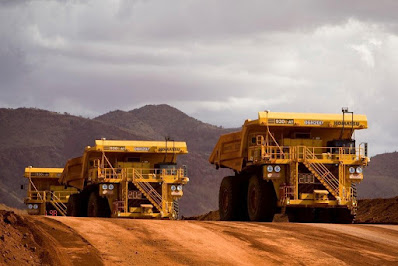
This one will be different. Aside from creating a residential camp in the middle of nowhere (apologies to my Watershed friends) to house the mine workers,  the mine will use new technology. We're talking about massive mining trucks that will have NO DRIVERS.  That's right, they will use proven robotic trucks to haul the ore out of the pit and up to the refinery. 

Another interesting tidbit is that the mine is being built on part of a lake bed. That means the existing Cote Lake is being moved to allow for mining. That's not an entirely new idea but it is indeed an incredible and expensive undertaking. I expect there will be plenty of stories... and good jobs. It will be interesting to see what this project does to the price of land nearby. 

Stay tuned.